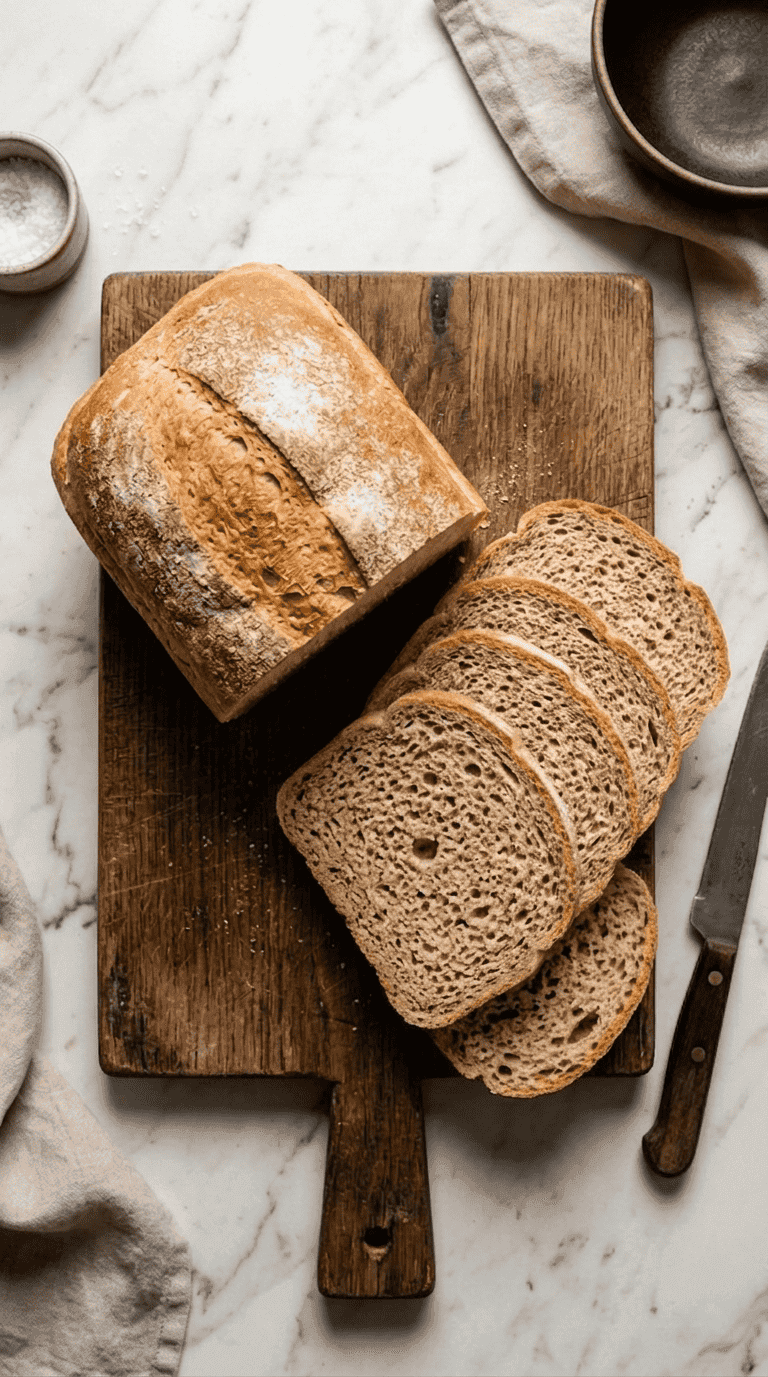
I’ve always appreciated the slow, deliberate process of traditional baking, but Ezekiel bread is a different beast entirely. It’s dense and earthy and, honestly, the most “honest” loaf of bread I’ve ever pulled out of my oven. Making this from scratch feels like a return to the basics, using ancient grains and legumes to create something truly nourishing.
I started making this because I wanted a bread that would actually keep my daughters full until dinner. It’s become a staple in our kitchen, and while it takes a bit more time than my quick cuban bread recipe, the nutritional payoff is worth every second of the wait.
why you will love my Recipe
- It’s Incredibly Healthy: By using natural grains and beans, you’re giving your body sustained energy. It’s a complete plant-based protein that actually makes you feel strong.
- Keeps You Full Longer: Because it’s so nutrient-dense, you won’t find yourself reaching for a snack an hour later.
- Rich, Nutty Taste: It has a depth of flavor that white bread just can’t touch. If you enjoy the earthiness of einkorn bread, this will be your new favorite.
- Versatile for Any Meal: Whether it’s topped with avocado and eggs or used for a hearty turkey sandwich, it elevates everything it touches.
- The Pride of Homemade: There is a specific kind of magic in watching a dry bean turn into a sprout and then into a fresh loaf. Your kitchen will smell amazing.
Ingredient Overview
We aren’t using milk, eggs, or butter here. Keeping the ingredients simple and ancient is what makes this bread unique. Scroll to the end of the post, and you will find everything you need there.
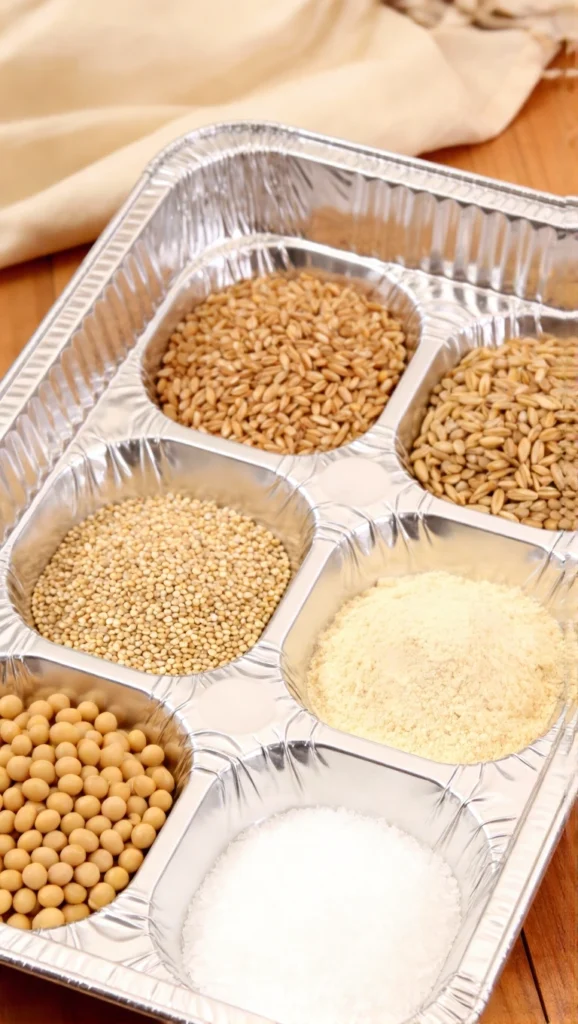
Whole Wheat Berries: The foundation that provides the body and structure.
Spelt or Barley: These add that signature nutty sweetness and depth.
Lentils: A secret weapon for plant protein and natural binding.
Soybeans (or kidney/northern beans): These improve the texture and round out the nutritional profile.
Yeast & Salt: For a gentle rise and to pull all those earthy flavors together.
Water: Essential for the soaking and blending process.
Step by Step Preparation
The Big Soak
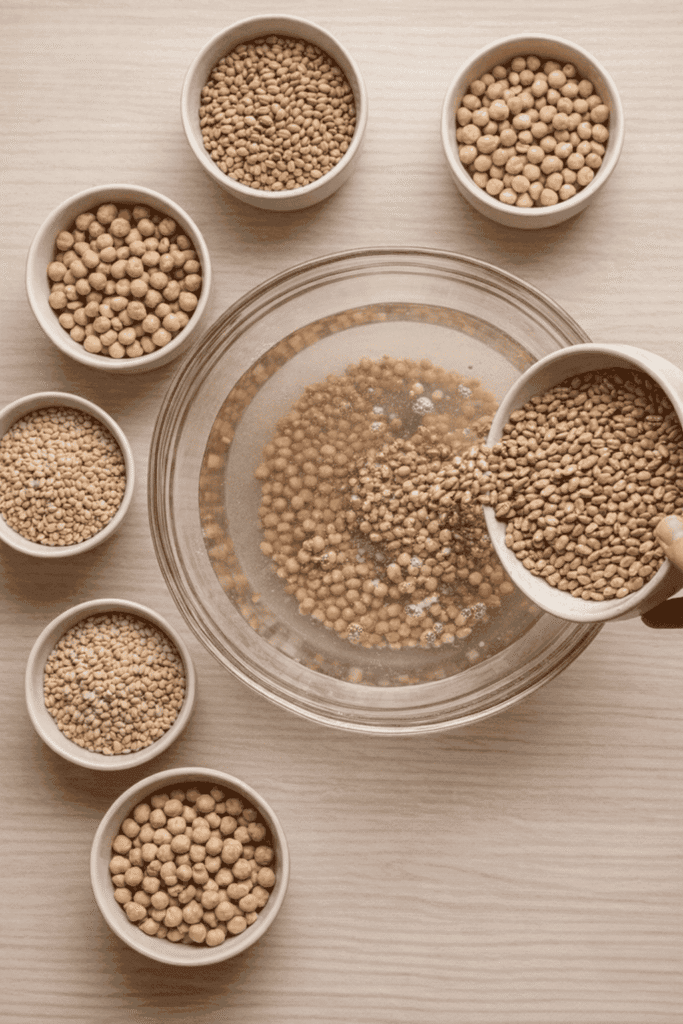
Everything starts by submerging your grains and legumes in filtered water. You want them to absorb enough moisture to “wake up” the dormant enzymes. This makes the final bread much easier to digest.
Draining and Rinsing
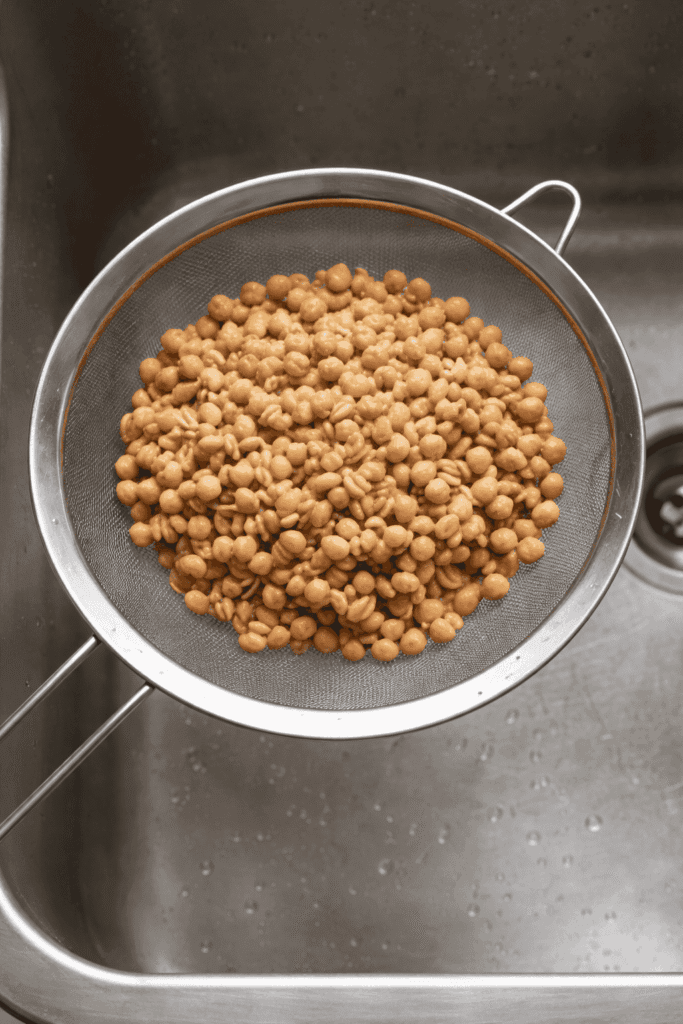
Once the soak is done, drain the water away. Give them a light rinse to keep everything fresh. This ensures your dough doesn’t end up with a “swampy” or loose texture.
Blending the Mixture
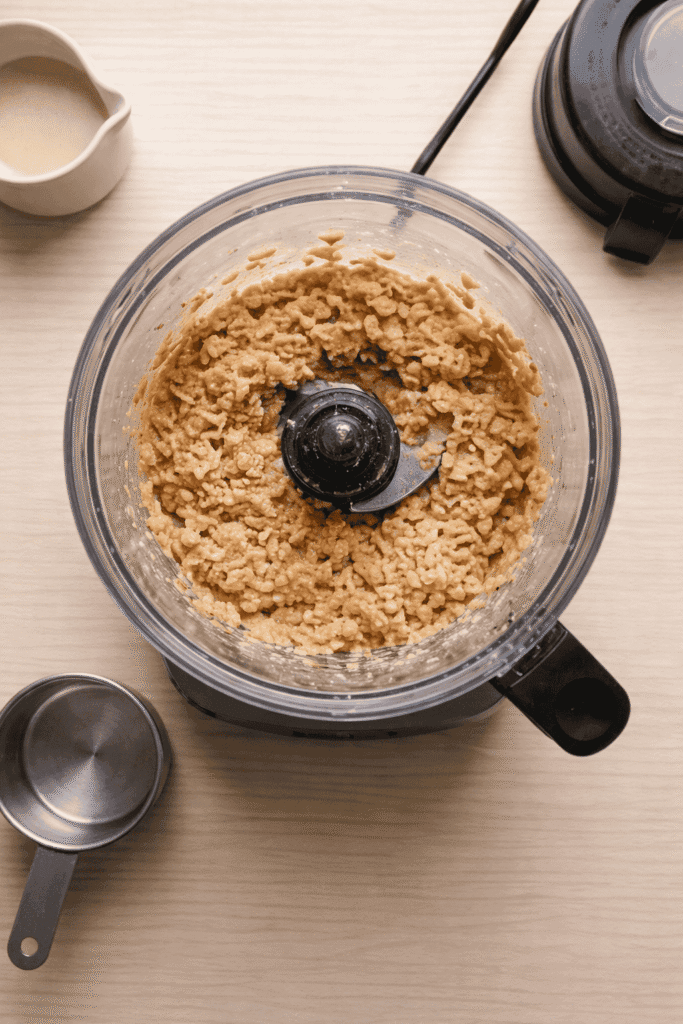
Process the soaked mixture until it forms a thick, grainy batter. Avoid over-blending! If it becomes a complete puree, the Ezekiel bread can turn out gummy instead of hearty.
Activating the Yeast

Mix your yeast with warm water until it’s foamy. This is the “engine” that gives our heavy grain mixture its lift. Combine your blended grains with the yeast and salt. The dough will be thicker and stickier than standard bread dough. Don’t let that alarm you! That’s exactly how it should look.
First Rest Period
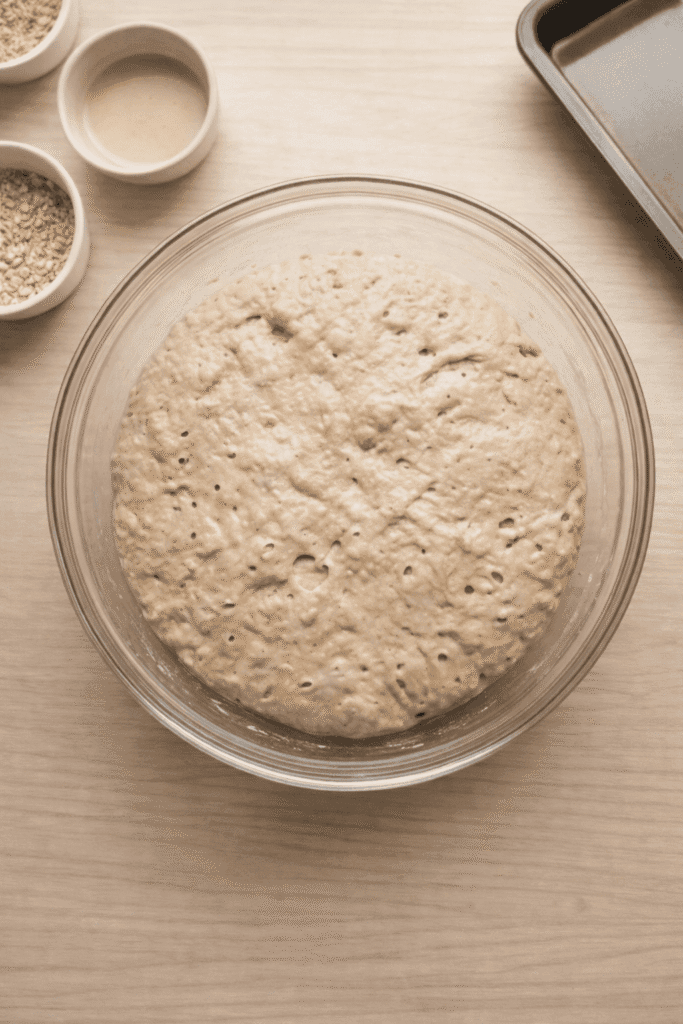
Cover the dough and let it sit. It won’t double in size like a typical white loaf, and that’s perfectly normal. It’s a slow, gentle rise.
Shaping and Panning
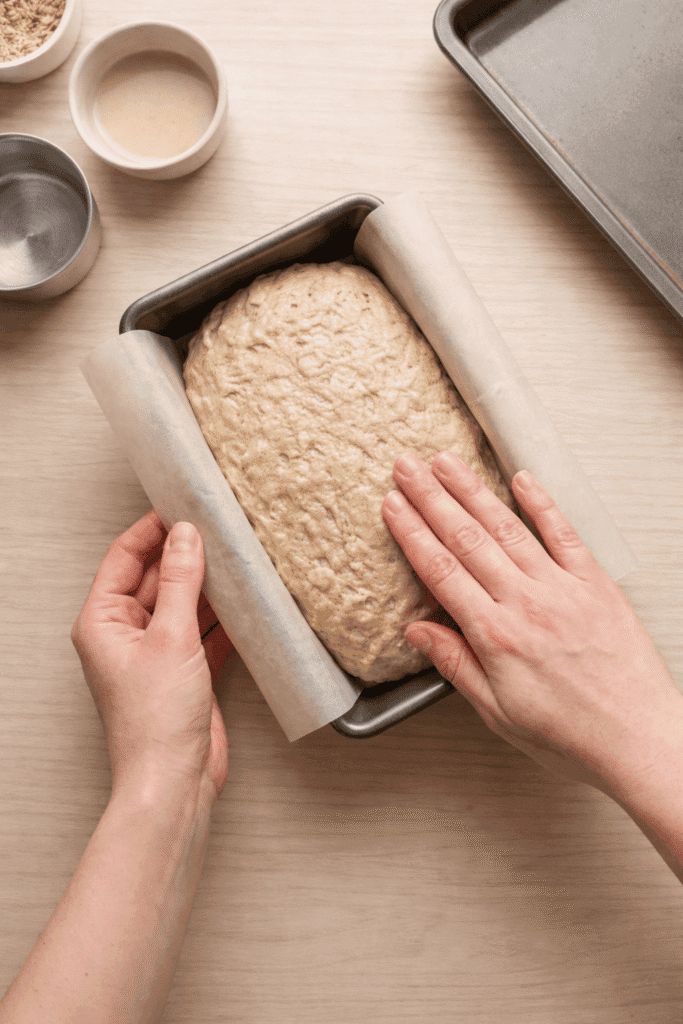
Transfer the dough into a greased loaf pan. I usually use wet hands to smooth out the top; it keeps the sticky dough from clinging to my fingers and gives the loaf a clean finish.
Baking the Ezekiel Bread
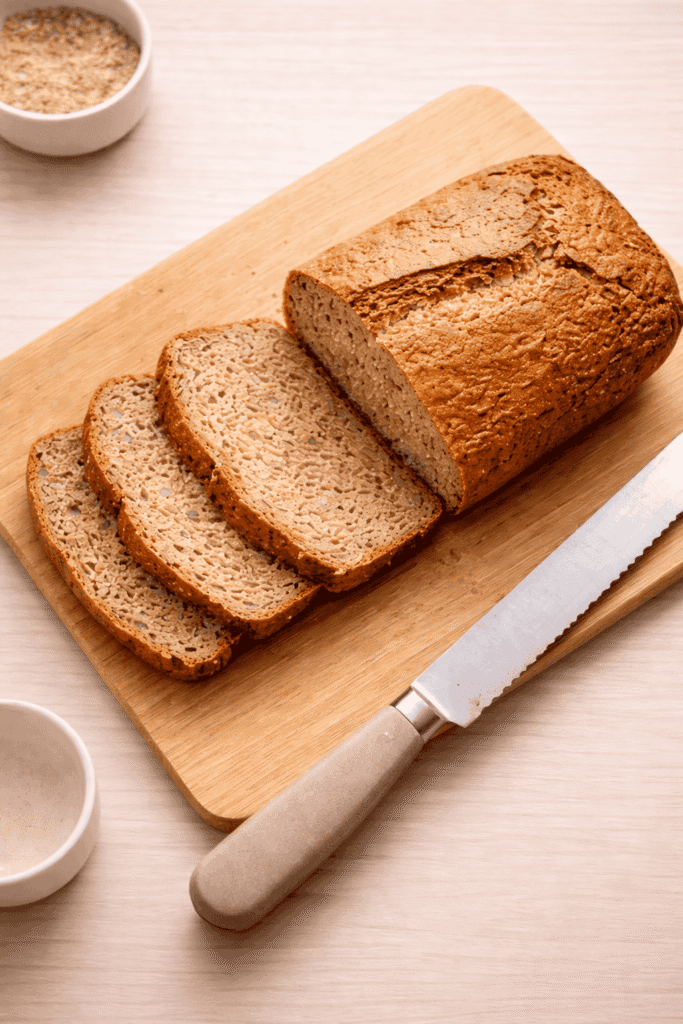
Bake until the loaf is firm and golden. When you tap the top, it should feel solid. Let it cool completely before you even think about slicing. Patience here is the key to a perfect crumb!
Helpful Tips
- Don’t Over-Blend: You want some texture. If you turn the sprouts into a complete liquid, the bread will be dense and gummy.
- The “Tap” Test: Tap the bottom of the loaf. If it sounds hollow, it’s done. If it sounds like a thud, give it another 5–10 minutes.
- Patience is a Virtue: You must let this cool completely before slicing. If you cut into it hot, the steam escapes and the inside stays “tacky.”
Common Troubleshooting
- “My bread is a brick! “ Your grains might not have sprouted long enough, or the room was too cold during the rise.
- “It’s too crumbly.” This can happen if the grains were too dry before grinding. A tablespoon of olive oil in the dough can help soften the crumb.
Storage Instructions
Since there are no preservatives, this bread won’t last forever on the counter.
- Room Temp: 2 days max in a breadbox.
- Fridge: Up to a week (toast it to bring back the texture!).
- Freezer: This is my favorite way. Slice it first, freeze the slices, and pop one directly into the toaster whenever the craving hits.
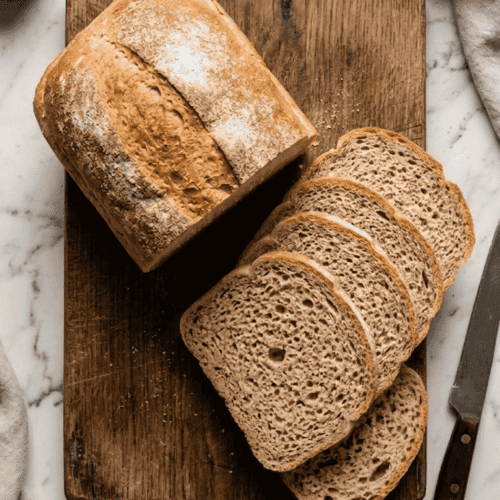
Wholesome Homemade Ezekiel Bread Recipe

Equipment
- Large mixing bowl
- Measuring cups and spoons
- Sprouting jar or tray with breathable cover
- Fine mesh strainer
- Grain mill or high-speed blender (for grinding sprouted grains)
- Wooden spoon or dough hook with stand mixer
- Clean kitchen towel or plastic wrap (for covering dough)
- Loaf pans (2 standard-size)
- Oven
- Cooling rack
- Sharp bread knife (for slicing)
Ingredients
Sprouted Grain and Legume Mix (You’ll need to sprout these before using:)
- 1 cup wheat berries
- 1/2 cup barley
- 1/4 cup spelt
- 1/4 cup millet
- 1/4 cup lentils green or red
- 2 tablespoons red kidney beans
- 2 tablespoons great northern beans
Dough Ingredients:
- 4 cups sprouted grains and legumes ground or blended
- 1/2 cup warm water filtered
- 1/4 cup olive oil optional, for softer crumb
- 2 teaspoons salt
- 2 tablespoons honey or maple syrup optional
- 2 1/4 teaspoons active dry yeast 1 packet
Instructions
Sprout the Grains and Legumes:
- Rinse grains and legumes thoroughly.
- Soak in a large bowl with filtered water for 8 to 12 hours.
- Drain and rinse. Spread on a tray or sprouting jar and allow to sprout for 48 to 72 hours, rinsing twice daily.
- Once sprouted (white tails visible), pat dry and prepare for grinding.
Prepare the Dough:
- Grind sprouted grains and legumes using a grain mill or high-speed blender.
- In a mixing bowl, combine 4 cups of the sprouted flour with warm water, yeast, salt, oil (optional), and honey (optional).
- Stir until a sticky dough forms.
Knead and Rise:
- Knead the dough by hand or with a dough hook for 8 to 10 minutes.
- Place in a greased bowl, cover with a damp cloth, and let rise for 1 to 2 hours in a warm area until doubled.
Shape and Final Rise:
- Punch down the dough, divide, and shape into two loaves.
- Place into greased loaf pans. Let rise again for 45 to 60 minutes.
Bake:
- Preheat oven to 350°F (175°C).
- Bake for 50 to 60 minutes until golden brown and hollow-sounding when tapped.
- Cool completely before slicing.
Notes
Frequently Asked Questions
Can I use unsprouted grains?
You can, but you’ll lose many of the nutritional benefits. Sprouting improves digestibility and unlocks vital nutrients.
Is it gluten-free?
No. Since we use wheat, spelt, and barley, this loaf contains gluten.
What should I eat this with?
It’s incredible with avocado and a poached egg or simply slathered in salted butter while still slightly warm from the toaster.
Can I use a bread machine?
You can, but I recommend using the “Whole Wheat” or “Manual” setting so you can keep an eye on that specific rise time.
How do I know the grains are sprouted enough?
Look for little white tails about the length of the grain. Usually takes between 48 and 72 hours.

Pingback: Fresh And Flavorful Bruschetta Appetizers - 2026
Pingback: Carnivore Bread Recipe You Can Easily Make - 2026
Pingback: Easy And Moist Lemon Blueberry Bread - 2026