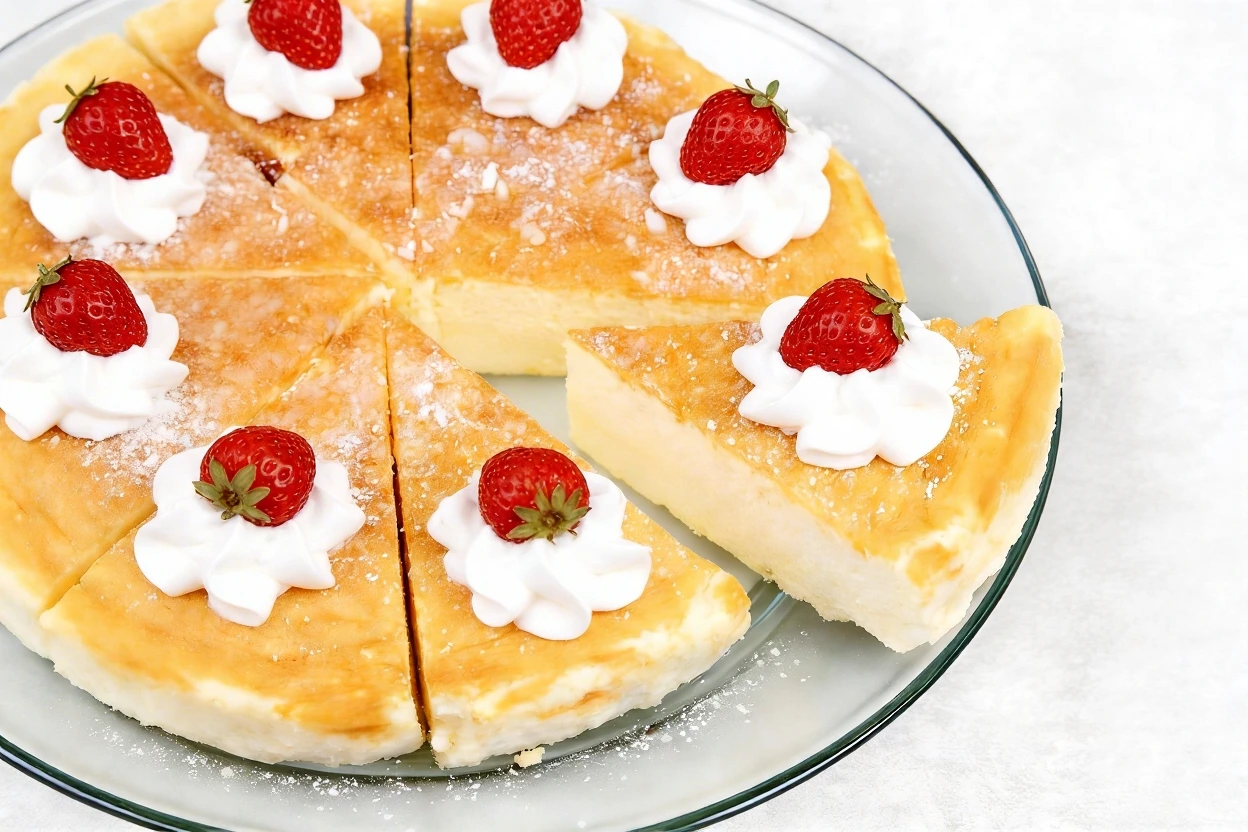
If you’ve ever dreamed of a dessert that feels as light as air, this is it. This cloud cake is defined by its impossibly fluffy texture that practically melts the moment it hits your tongue. It’s more than just a sweet treat; it’s the kind of effortless, elegant bake that brings a sense of joy to any table.
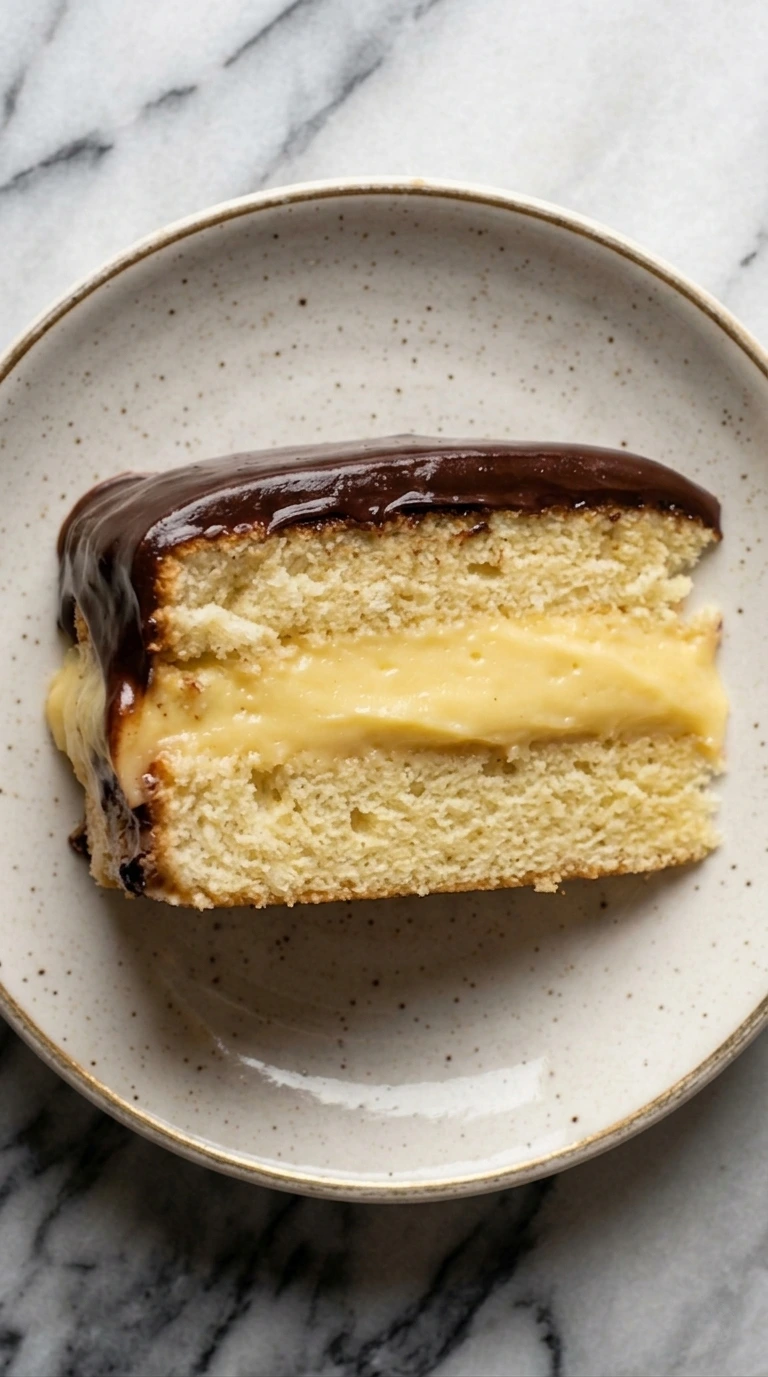
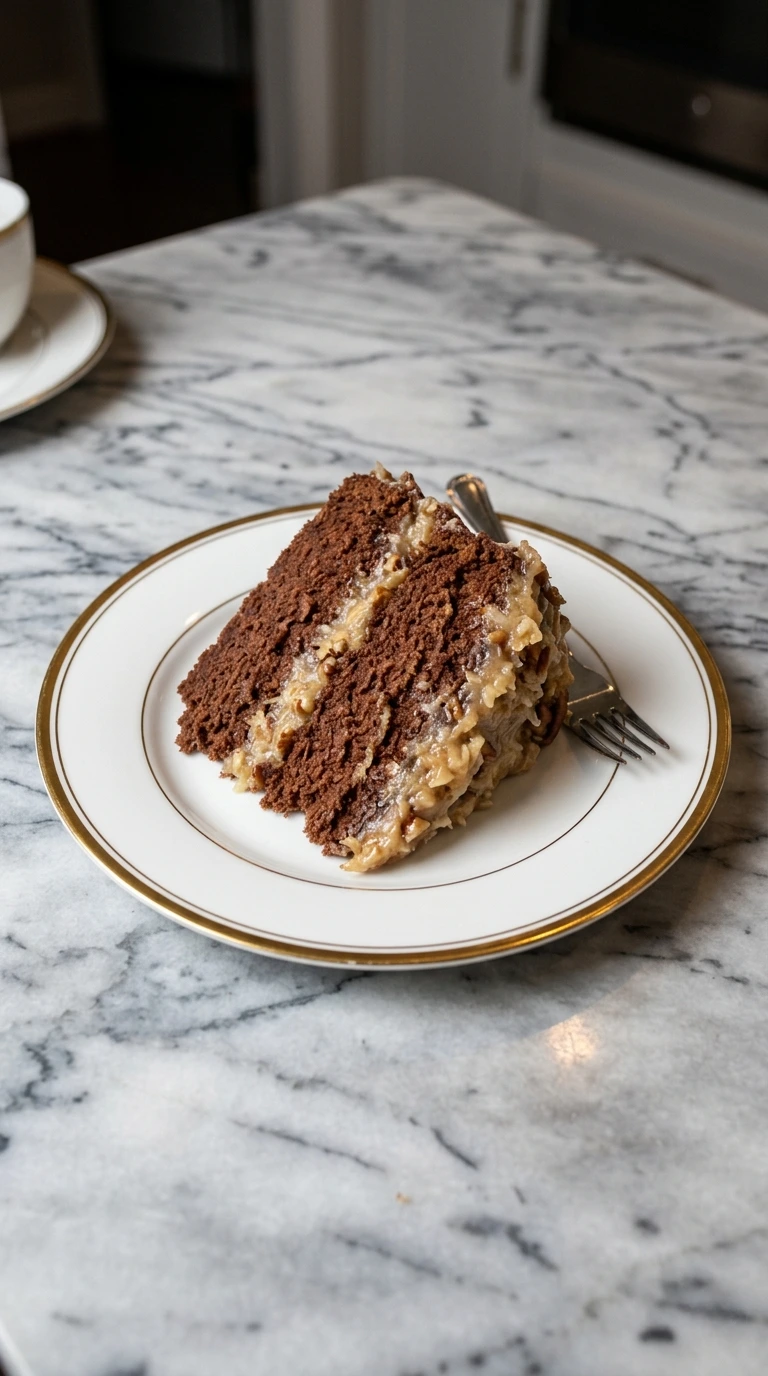
I’m excited to walk you through my process for achieving that signature bakery-style loft right in your own kitchen. For more timeless classics, you’ll love the rich layers of my German Chocolate Cake or the creamy, glazed finish of a traditional Boston Cream Cake.
Why You Will Love This Recipe
- The Texture: You achieve a delicate, porous crumb that is remarkably light.
- Pantry Staples: You likely already have every ingredient needed in your kitchen.
- Versatility: It serves as a perfect canvas for seasonal fruits, zests, or creams.
- Low Stress: By following a few key temperature rules, you can skip the complicated techniques often found in professional pastry.
Ingredient Overview
Understanding the why behind your ingredients is the first step toward becoming a better baker. Here is how these simple components work together:
Milk and Butter
These provide the necessary moisture and a hint of richness. Using room-temperature milk ensures it emulsifies perfectly with the fats, preventing a heavy or “streaky” batter.
Eggs
These are the backbone of the cake. While the yolks provide color and a tender mouthfeel, the whites are responsible for the “cloud” effect. When whipped, they trap air that expands in the heat of the oven.
Sugar
Beyond sweetness, sugar acts as a stabilizer. It binds to the water in the egg whites to create a strong, glossy meringue that won’t collapse when you fold in your flour.
Flour
Because we want a fine, soft crumb, we use flour with lower protein. Sifting it is non-negotiable; it removes lumps and aerates the powder so it doesn’t weigh down the egg foam.
Step by Step Preparation
Success in baking is all about the sequence. Follow these steps to ensure your cake reaches its full height.
Prepare Your Ingredients
Baking is a science of ratios. Measure your ingredients before you begin. Ensure your eggs and milk have lost their refrigerator chill, and preheat your oven to ensure the rise starts the second the pan hits the rack.
Separate and Whip the Eggs
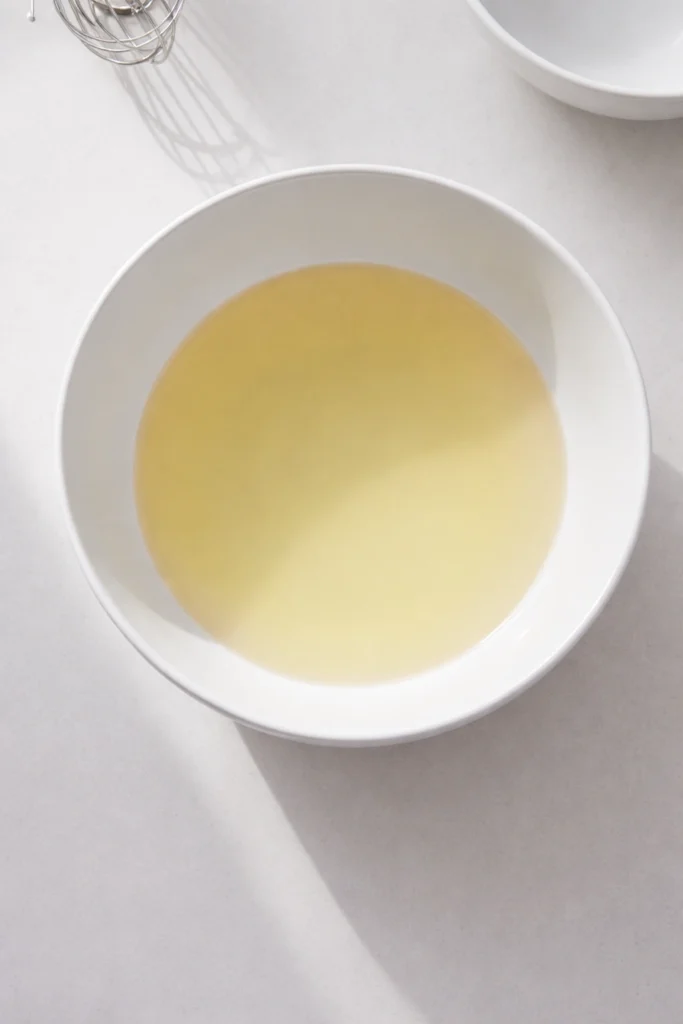
This is the heart of the recipe. When whipping your egg whites, look for “glossy peaks.” You want the foam to be firm enough to hold its shape but still look smooth and shiny. If it looks chunky or dry, you’ve gone too far.
Combining the Base
In a separate bowl, whisk your yolks with the butter, milk, and vanilla. This creates a flavor-rich emulsion. Once smooth, sift your flour directly over this mixture and stir until just combined. Over-mixing here can develop gluten, which leads to a tough cake.
The “Folding” Technique
The most critical movement is combining the whites and the base. Use a large spatula to cut through the center, scrape the bottom, and lift the batter over the whites. Rotate the bowl as you go. You are looking for a uniform color without deflating the air you just whipped in.
Bake with Care
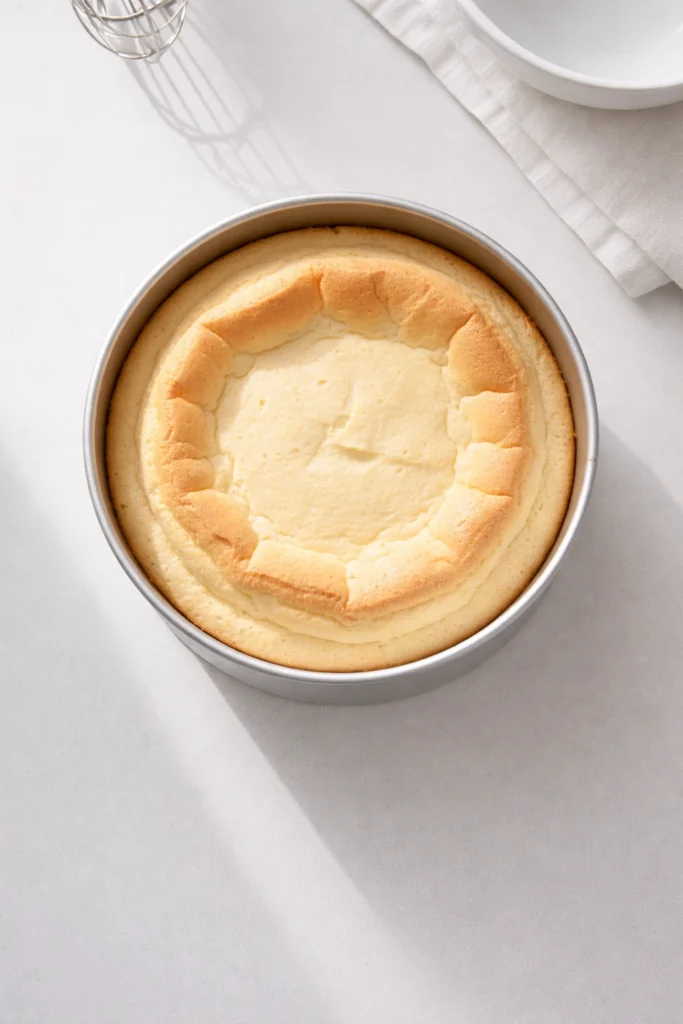
Pour the batter into an ungreased pan and bake on the center rack at 325°F until the top is golden and springy. Avoid opening the oven door early, as the sudden temperature change can cause the delicate structure to collapse.
Once finished, immediately invert the pan and let the cake cool completely upside down to keep the crumb from compressing under its own weight. This simple trick allows gravity to maintain that signature airy loft while the proteins set.
Helpful Tips
- Cleanliness is Key: Even a drop of oil or egg yolk in your mixing bowl can prevent your egg whites from whipping. I always wipe my bowl with a paper towel dipped in lemon juice first.
- Room Temperature is Non-Negotiable: Last May, I tried to rush this for a brunch and didn’t let my eggs hit room temperature. The cake came out half as tall and felt dense. Learn from my impatience; give those eggs 30 minutes on the counter!
- The Center Rack: Always bake in the middle of the oven to ensure even heat distribution and prevent the bottom from scorching before the top is set.
Common Mistakes
Peeking in the Oven: Opening the door too early causes a sudden temperature drop, which can make a delicate sponge collapse.
Under-beating: If your peaks are too soft, the cake won’t have the structural integrity to stay tall.
Greasing the Pan: Unlike other cakes, a cloud cake needs to “climb” the walls of the pan. An ungreased pan allows the batter to grip the sides and rise.
Flavor Variations
Once you’ve mastered the classic, try these twists:
- Chocolate Cloud: Swap two tablespoons of flour for high-quality cocoa powder.
- Lemon Bright: Add the zest of one large lemon and a teaspoon of poppyseeds for a refreshing brunch version.
- Berry Garnish: Since the cake is light, it pairs perfectly with a heavy dollop of whipped cream and fresh macerated berries.
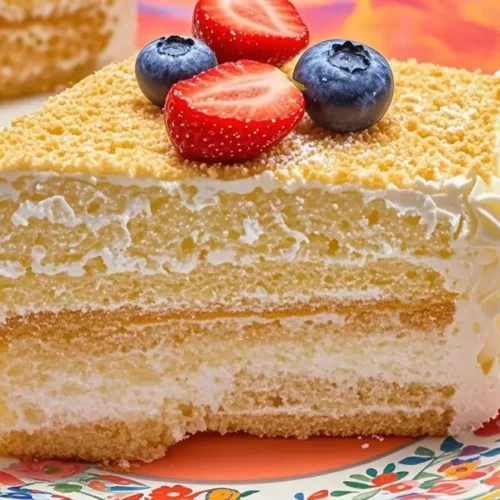
Soft and Dreamy Cloud Cake Recipe

Equipment
- Stand or hand mixer with whisk attachment
- 8 or 9-inch tube or springform pan
- Mixing bowls
- Spatula
- Sifter or fine mesh sieve
Ingredients
- 6 large egg whites room temperature
- 1/2 teaspoon cream of tartar
- 3/4 cup granulated sugar superfine if possible
- 1/2 teaspoon vanilla extract
- 1/2 cup cake flour sifted
- 1/4 teaspoon salt
Instructions
- Preheat your oven to 325°F. Do not grease the pan.
- In a clean, dry mixing bowl, whip the egg whites until foamy.
- Add cream of tartar and continue whipping until soft peaks form.
- Gradually add the sugar, one tablespoon at a time, while whipping until stiff, glossy peaks form.
- Gently mix in vanilla extract.
- Sift together the cake flour and salt, then gradually fold into the egg white mixture using a spatula.
- Pour the batter into an ungreased 8 or 9-inch tube or springform pan. Smooth the top gently.
- Bake for 35 to 40 minutes until the cake is golden and springs back when lightly touched.
- Invert the pan and let the cake cool completely upside down to prevent collapsing.
- Once cooled, run a knife along the edges and release the cake.
- Decorate as desired with whipped cream, powdered sugar, or fresh fruit.
Notes
Frequently Asked Questions
What exactly is a “cloud cake”?
It is a sponge-style cake that relies on aerated egg proteins rather than chemical leaveners like baking soda. This results in a texture that is uniquely porous and light.
Can I use a regular cake pan?
You can, but a tube pan (with a hole in the middle) is best because it allows heat to reach the center of the cake quickly, helping it rise evenly.
How do I store leftovers?
Because this cake has a high moisture content, keep it in an airtight container at room temperature for 24 hours, or in the fridge for up to 3 days to maintain that “dreamy” softness.
Can I add fruit to the batter?
It’s best to add fruit as a topping rather than mixing it into the batter. A fruit glaze or compote on top works beautifully instead.
Pingback: Southern-Style Hoe Cake Recipe - 2025